The paver sealing process involves cleaning, repairing, applying sealer in even coats, and allowing proper curing time to protect and enhance your outdoor pavers. Sealing is typically needed every three to five years, or sooner if your pavers show signs of fading, staining, or weed growth between joints. The process usually takes two to three days from start to finish, depending on weather conditions and the size of the area.
Why Sealing Protects Your Outdoor Investment
Pavers face constant exposure to rain, salt air, UV rays, foot traffic, and temperature swings. Without protection, these elements gradually break down the surface, allowing moisture to penetrate and cause damage from within. Sealed pavers resist staining from oil, dirt, and organic growth while maintaining their original color longer.
In coastal areas like South Jersey, saltwater spray and humidity accelerate wear. Unsealed pavers absorb moisture that expands when it freezes, leading to surface cracks and shifting. Sealing creates a barrier that blocks moisture penetration and extends the lifespan of your installation by years.
Signs Your Pavers Need Sealing
Faded color is the most visible indicator. When pavers lose their vibrant tone and start looking washed out, the surface has weathered enough that protection is overdue. Water absorption is another clear sign. Pour a small amount of water on the surface. If it soaks in quickly rather than beading up, the pavers are no longer protected.
Weeds or moss growing between joints signal that sand has eroded and moisture is settling in. Stains that won’t wash away with a hose indicate the surface is porous and absorbing contaminants. If your pavers are more than three years old and have never been sealed, it’s time to consider the process.

Deep Cleaning the Surface Properly
The paver sealing process starts with thorough cleaning because sealer won’t bond to dirt, oil, or algae. Professionals use a pressure washer set to 3,000 PSI or higher, combined with a surface cleaner attachment that scrubs evenly without leaving streaks or gouges. This removes embedded grime that a garden hose can’t touch.
Any oil stains require a degreaser applied 15 to 20 minutes before pressure washing. Efflorescence, the white chalky residue that sometimes appears on pavers, needs an acid-based cleaner to dissolve the salts. Without removing these deposits, the sealer will trap them underneath and create a hazy appearance.
After washing, the surface must dry completely, which typically takes 24 to 48 hours depending on humidity and sunlight. Applying sealer to damp pavers traps moisture and causes cloudiness or bubbling that ruins the finish.
Repairing Damage Before Sealing in Absecon
Any cracks, chips, or sunken areas need correction before sealing begins. Cracked pavers should be replaced entirely rather than patched, since sealer will highlight imperfections instead of hiding them. If pavers have settled unevenly, they must be lifted, the base re-leveled with sand or stone dust, and the pavers reset.
Joint sand often erodes over time, leaving gaps that allow shifting and weed growth. Contractors fill these joints with polymeric sand, which hardens when activated with water to lock pavers in place. This step prevents future movement and creates a uniform surface that accepts sealer evenly.
Applying Sealer in Even Coats
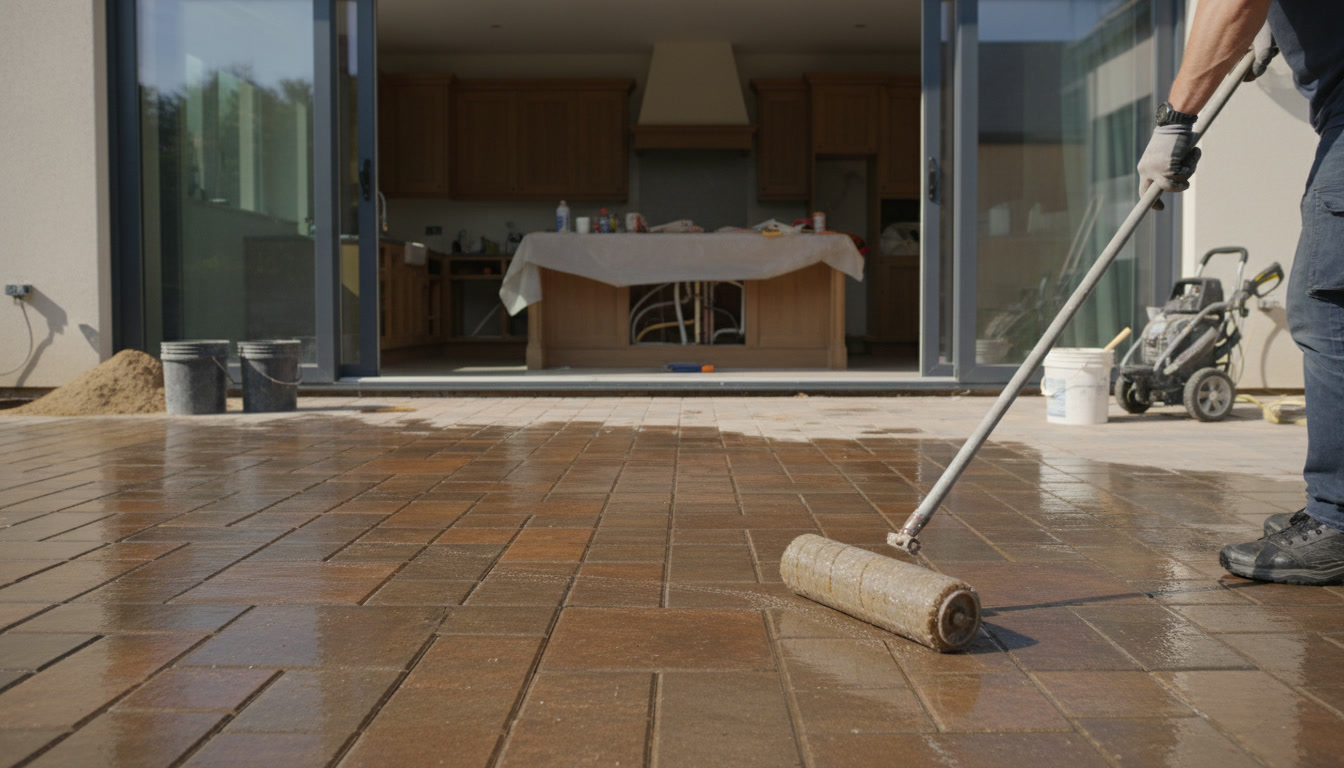
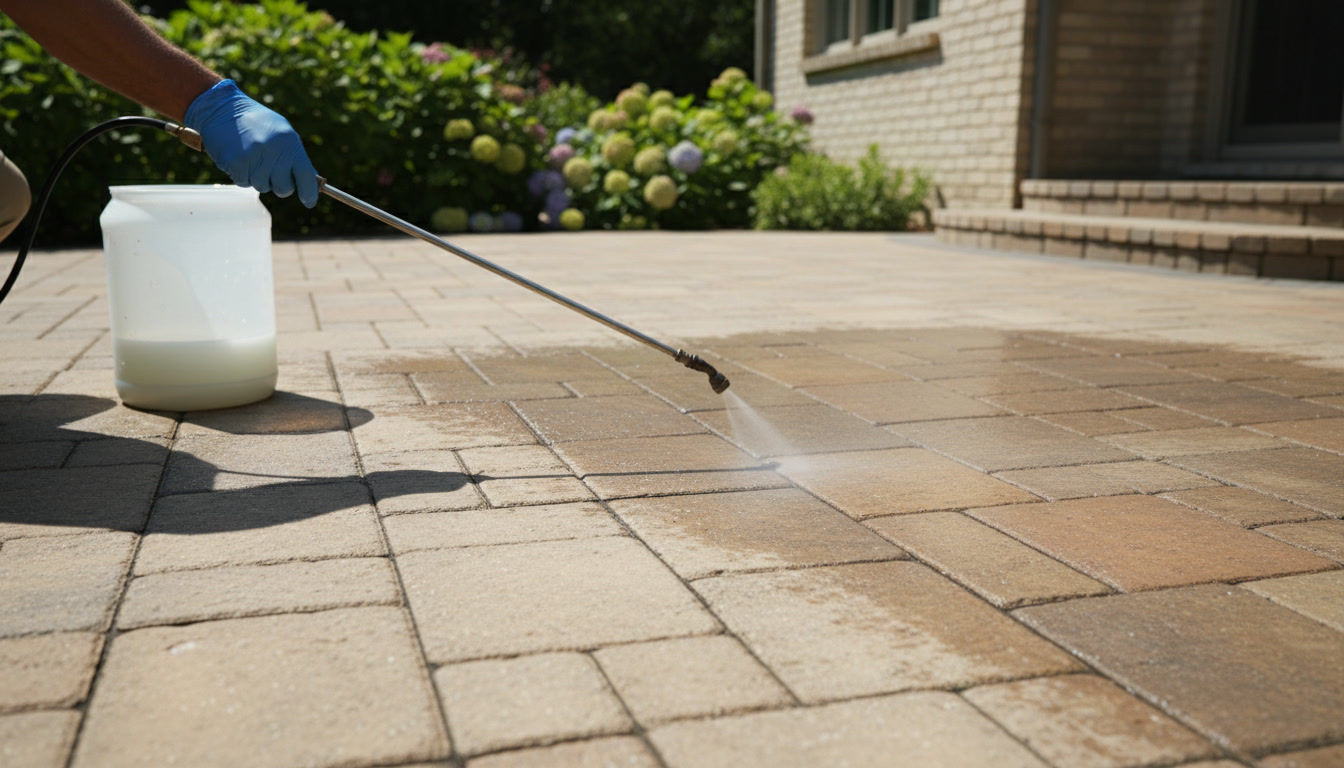
Professional crews apply sealer using a low-pressure sprayer or roller, depending on the product type and surface texture. Sprayers work faster on large areas but require careful technique to avoid over-application, which leaves puddles that dry with a milky haze. Rollers give more control on smaller spaces and textured surfaces.
The first coat penetrates the paver surface and fills tiny pores. After it dries, typically within one to three hours, a second coat is applied to build the protective layer. Some high-traffic areas benefit from a third coat, though this depends on the sealer type and manufacturer recommendations.
Sealer thickness matters. Too thin, and it won’t protect adequately. Too thick, and it forms a sticky film that attracts dirt and turns cloudy. Experienced contractors know the right coverage rate, usually around 200 to 300 square feet per gallon for most acrylic or polyurethane sealers.
Drying and Curing Time Requirements
Drying and curing are different. Drying means the sealer feels dry to the touch, which happens in a few hours. Curing means the sealer has chemically bonded and reached full hardness, which takes 24 to 72 hours. Walking on the surface is usually safe after 24 hours, but you should avoid moving furniture or parking vehicles for at least 48 hours.
Weather plays a major role. High humidity or cool temperatures extend curing time. Rain within 24 hours of application can wash away sealer before it bonds, ruining the job. Contractors watch forecasts closely and avoid sealing when rain is expected within two days.
Temperature also affects results. Most sealers require air and surface temperatures between 50 and 90 degrees Fahrenheit. Applying sealer in direct summer sunlight causes it to dry too fast, preventing proper penetration and leaving a blotchy finish.
Choosing Between Water-Based and Solvent-Based Sealers
Water-based sealers are easier to apply, dry faster, and produce less odor. They work well for residential driveways and patios where a natural, matte finish is preferred. These sealers typically last two to three years before reapplication is needed.
Solvent-based sealers penetrate deeper and provide a glossy, wet look that enhances color dramatically. They resist wear longer, often lasting four to five years in moderate climates. However, they require more ventilation during application and take longer to cure. For properties near the coast, solvent-based products often perform better against salt exposure and heavy moisture.
Some newer hybrid sealers combine the ease of water-based application with the durability of solvent formulas. Your contractor can recommend the best option based on paver type, traffic level, and exposure conditions.
How Long Sealed Pavers Last
Properly sealed pavers can go three to five years before needing resealing, though high-traffic areas or harsh climates may shorten this window. The sealer itself doesn’t fail suddenly. Instead, it gradually wears away from foot traffic, UV exposure, and cleaning. You’ll notice color starting to fade again or water no longer beading on the surface.
Resealing is simpler than the initial process because the surface usually requires less repair. A cleaning, light sanding to restore joints if needed, and one or two fresh coats typically restore protection. Regular maintenance extends the life of both the sealer and the pavers underneath.
Quality Affordable Construction LLC has sealed exterior projects across South Jersey since 2017, using durable products that hold up to coastal conditions. Proper sealing not only protects your investment but also reduces long-term maintenance costs.

Maintenance After Sealing
Sealed pavers need less aggressive cleaning than unsealed surfaces. A mild detergent and garden hose are usually enough for routine dirt removal. Avoid pressure washing sealed pavers unless necessary, since the high pressure can strip the sealer prematurely.
Spills should be cleaned quickly. While sealer resists staining, leaving oil or chemicals on the surface for days can still cause discoloration. Sweep regularly to prevent dirt buildup, which acts like sandpaper under foot traffic and wears down the sealer faster.
Inspect joints annually. If polymeric sand erodes or cracks appear, address them before they widen. Small repairs prevent larger problems that require removing and resetting pavers. Similar to how regular maintenance preserves flooring installation and renovation work indoors, consistent care outdoors extends the life of your hardscape.
Working With a Professional Team
The difference between a professional sealing job and a DIY attempt often shows up months later. Improper surface prep leaves dirt trapped under the sealer. Wrong application rates cause peeling or cloudy patches. Using the wrong product type for your climate or paver material leads to premature failure.
Professionals bring commercial-grade equipment, years of experience reading weather conditions, and knowledge of which products perform best in specific situations. They also carry liability insurance that protects your property if something goes wrong during the process.
A quality contractor will walk your property, assess the condition of your pavers, explain the steps involved, and provide a clear timeline. They’ll answer questions about maintenance and schedule follow-up sealing when the time comes. This level of service ensures your outdoor surfaces stay protected and attractive for years.
Protecting Your Outdoor Surfaces for the Long Term
Sealing pavers is a straightforward process that delivers lasting protection when done correctly. The key steps are thorough cleaning, proper repairs, even application, and adequate curing time. Knowing when your pavers need sealing and choosing the right product type for your environment keeps your outdoor spaces looking sharp and performing well.
Quality Affordable Construction LLC provides paver installation and sealing services throughout Egg Harbor Township and surrounding communities including Ocean City, Atlantic City, and Cape May. With 20 years of construction experience and a commitment to workmanship that lasts, we handle every detail from surface prep to final curing. If your pavers are showing signs of wear or you’re ready to protect a new installation, reach out to our team at +16095923410 to discuss your project and schedule an evaluation.