A structurally unstable deck can fail without warning, causing injuries and expensive emergency repairs. Your deck needs structural repairs when you notice rotting support posts, cracked joists, loose railings, or severe surface deterioration. Catching these issues early prevents collapse, protects your property value, and keeps everyone who uses your outdoor space safe from preventable accidents.
Why Deck Structural Issues Develop Over Time
Wood naturally degrades when exposed to moisture, temperature swings, and ultraviolet light. South Jersey’s coastal humidity accelerates this process, especially when drainage is poor or protective finishes wear away. Even pressure-treated lumber loses its chemical protection after several years, leaving the wood vulnerable to rot and insect damage.
Metal fasteners corrode when water penetrates joints and gaps. Galvanized nails and screws lose their protective coating, expanding as rust forms and splitting the surrounding wood. This weakens connections between deck boards, joists, and support beams, creating instability that worsens with every season.
How Weight and Use Patterns Stress Deck Framing
Heavy furniture, grills, planters, and hot tubs concentrate weight on specific joists and beams. When multiple people gather in one area, the dynamic load exceeds what static weight alone would create. Over years of use, this repetitive stress causes fasteners to loosen, wood fibers to compress, and structural members to sag or crack.
Ledger boards attached to your home carry half the deck’s load. If the attachment fails due to corroded lag screws or deteriorated rim joists, the entire structure can pull away from the house. This type of failure is sudden and catastrophic, often occurring during gatherings when the deck is fully loaded.
Visible Warning Signs on Deck Surfaces and Railings
Boards that feel spongy or soft when you walk across them indicate advanced rot beneath the surface. Press a screwdriver into questionable areas. If the tool sinks more than a quarter inch, the wood has lost structural integrity and needs replacement, not just surface treatment.
Railings that wobble when you push them sideways have loose connections to posts or weakened post anchors. Building codes require railings to withstand 200 pounds of horizontal force at any point. A railing that moves under light pressure will fail when someone actually leans against it.
Splitting or cracking deck boards expose the framing below to water infiltration. What starts as a cosmetic problem becomes structural when moisture reaches joists and beams. Gaps wider than a quarter inch between boards suggest the framing has shifted or settled unevenly.
Critical Framing and Support Issues in Absecon Properties
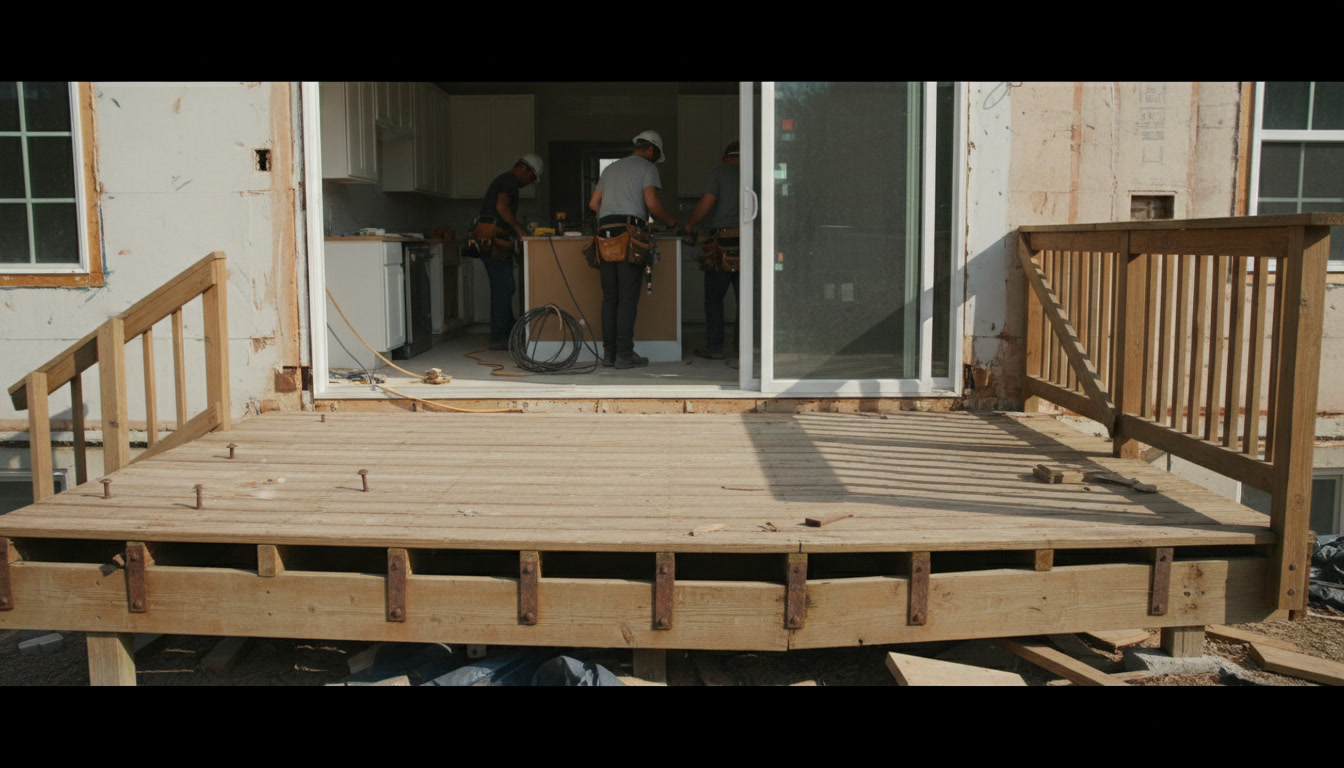
Support posts sitting directly on soil or concrete without proper footings will sink and shift. Footings must extend below the frost line, typically 24 to 36 inches deep in southern New Jersey, and include a concrete pier to distribute weight. Posts on shallow or missing footings will cause the entire deck to tilt and separate from the house over time.
Joists with visible cracks longer than six inches or sagging more than an inch per eight feet of span cannot safely carry loads. Sister joists installed alongside damaged members can restore strength temporarily, but severely compromised framing usually requires complete replacement to meet current building standards.
Rot at the base of support posts is common where wood contacts concrete or trapped moisture. The bottom 12 inches of each post should be inspected annually. If rot extends more than two inches up from the base, the post has lost load-bearing capacity and must be replaced before the deck becomes unsafe.
Fastener and Connection Failures That Compromise Safety
Nails backing out of boards create trip hazards and indicate the wood is expanding and contracting excessively due to moisture cycling. This movement stresses the entire fastening pattern. Decks built with nails instead of screws are more prone to this issue, especially in high-humidity coastal areas.
Joist hangers with missing or corroded nails cannot support the intended loads. Each hanger requires specific fasteners driven into every hole. Contractors sometimes skip fasteners during installation, leaving connections weak from day one. Inspect hangers from below for rust stains, bent metal, or nails that have pulled through the metal.
Ledger board connections require lag screws or through-bolts every 16 inches, penetrating into solid framing behind your home’s exterior sheathing. If you can see gaps between the ledger and the house, or if the fasteners spin freely when tested, the attachment has failed and the deck is at risk of collapse.
When to Conduct a Professional Deck Inspection
Annual inspections catch problems before they become safety hazards. Schedule these during dry weather when moisture damage and rot are most visible. A qualified contractor will check every structural component, test connections under load, and identify issues invisible from above.
Properties built before 2009 may not meet current building codes for guardrail height, baluster spacing, or stair construction. While older decks are grandfathered in, refinancing or selling your home often triggers code compliance reviews. Addressing structural deficiencies proactively avoids delays during real estate transactions.
After severe weather events or when you’re considering selling your property, a detailed inspection documents the deck’s condition. This protects you from liability if someone is injured and provides a baseline for insurance claims if storm damage occurs.
Five Steps to Assess Your Deck’s Structural Condition
Start by walking the entire surface, noting any boards that flex excessively or produce unusual sounds. Healthy deck boards should feel solid and stable underfoot. Map problem areas with photos for reference during repairs.
Test every railing section by pushing horizontally with moderate force. Movement at the top of posts or where rails connect to posts signals loose fasteners or rotted wood. Check that balusters are spaced no more than four inches apart to prevent children from falling through.
Inspect underneath the deck with a flashlight. Look for water stains, soft spots, insect damage, and corrosion on metal components. Pay special attention to where joists rest on beams and where the ledger attaches to the house. These connection points carry the highest loads.
Examine all visible fasteners for rust, looseness, or damage. Use a wrench to test lag screws in the ledger board. They should be tight and immovable. Loose or missing fasteners indicate the structure has shifted or the wood has deteriorated around the connection.
Measure the deck’s level using a four-foot spirit level. Slopes greater than half an inch over four feet suggest settling foundations or failed support posts. While minor settling is normal, pronounced tilting indicates serious structural problems that require immediate attention.
Repair Options When You Identify Structural Problems
Surface repairs like replacing individual boards or refinishing solve cosmetic issues but don’t address underlying structural deficiencies. Before investing in appearance upgrades, ensure the framing, connections, and supports are sound. Otherwise, you’re applying new materials to a failing foundation.
Partial rebuilds replace damaged joists, beams, or posts while preserving serviceable components. This approach costs less than full replacement but requires careful assessment to ensure remaining materials will last. Mixed-age framing can create maintenance challenges as older components continue to deteriorate at different rates.
Complete deck replacement makes sense when rot or damage affects more than 40 percent of the structure, or when the existing deck doesn’t meet current building codes. Modern materials like composite decking and stainless steel fasteners dramatically reduce future maintenance and extend service life beyond what wood alone can provide. Many homeowners who invest in professional deck construction find the upfront cost justified by decades of trouble-free use and increased home value.
Material Choices That Prevent Future Structural Issues
Pressure-treated southern yellow pine remains the most economical framing material for joists, beams, and posts. Verify the lumber is rated for ground contact when used within 18 inches of soil. Higher retention levels provide better rot resistance in high-moisture environments common along the New Jersey coast.
Composite and PVC decking eliminates surface rot and splitting but still requires properly engineered framing underneath. These materials expand and contract differently than wood, requiring specific fastening systems and joist spacing. Following manufacturer installation guidelines prevents warping and fastener failures that compromise both appearance and safety.
Stainless steel or coated structural screws cost more than galvanized fasteners but won’t corrode in coastal humidity. The investment pays off through longer service life and fewer callbacks for loose boards or failed connections. Deck construction is one of many exterior projects where choosing the right materials upfront prevents expensive repairs later.
Code Requirements and Building Permits for Deck Repairs
Most municipalities require permits for structural deck repairs beyond simple board replacement. Permits ensure work meets current building codes for load capacity, railing height, and stair dimensions. Unpermitted work complicates home sales and may void insurance coverage if the deck fails and causes injury.
Inspections verify that footings extend below the frost line, ledger attachments penetrate solid framing, and guardrails meet height and strength requirements. While the permit process adds time and cost, it protects you from liability and ensures repairs will last. Contractors familiar with local requirements can navigate permitting efficiently, minimizing delays.
Homeowners who attempt unpermitted structural repairs risk fines and being required to tear out completed work for inspection. In some cases, building departments require full deck replacement when they discover unpermitted modifications during routine property inspections or sale transactions.
How Weather and Climate Affect Deck Longevity
Coastal properties experience higher humidity and salt exposure than inland locations. This accelerates corrosion of metal fasteners and breaks down wood fibers more quickly. Decks in towns like Ocean City and Sea Isle City require more frequent inspections and maintenance than those farther from the ocean.
Freeze-thaw cycles expand water trapped in wood and concrete, creating cracks and accelerating deterioration. Proper drainage prevents water from pooling on deck surfaces or around footings. Sloping boards slightly and installing flashing over ledger connections channels water away from vulnerable areas.
Direct sunlight breaks down wood finishes and causes unprotected lumber to crack and split. Decks with southern or western exposure need more frequent sealing than shaded structures. UV-resistant stains and sealers extend the time between maintenance cycles but still require reapplication every two to three years. Similar environmental considerations affect other outdoor improvements, as discussed in our guide on choosing deck materials for your backyard.
Protecting Your Investment and Your Family
Regular maintenance extends deck life and prevents small problems from becoming structural failures. Clean surfaces annually to remove debris that traps moisture. Apply quality sealers according to manufacturer recommendations. Tighten loose fasteners promptly and replace damaged boards before rot spreads to the framing.

Budget for major structural work every 15 to 20 years, even with diligent maintenance. Wood framing has a finite service life, and eventual replacement is more cost-effective than repeated temporary fixes. Planning ahead prevents emergency repairs when the deck becomes suddenly unusable or unsafe.
Understanding warning signs, conducting regular inspections, and addressing problems early keeps your outdoor space safe and functional for years. Structural issues rarely improve on their own. What starts as a minor concern can quickly escalate into a dangerous situation requiring expensive emergency intervention.
Quality Affordable Construction LLC has helped property owners throughout South Jersey identify and resolve deck structural issues since 2017. Our team brings 20 years of construction experience to every inspection and repair, ensuring your deck meets current safety standards and performs reliably for decades. If you’ve noticed any of the warning signs described above, don’t wait for the problem to worsen. Contact us at +16095923410 to schedule a thorough structural assessment and receive straightforward recommendations for keeping your deck safe and sound.