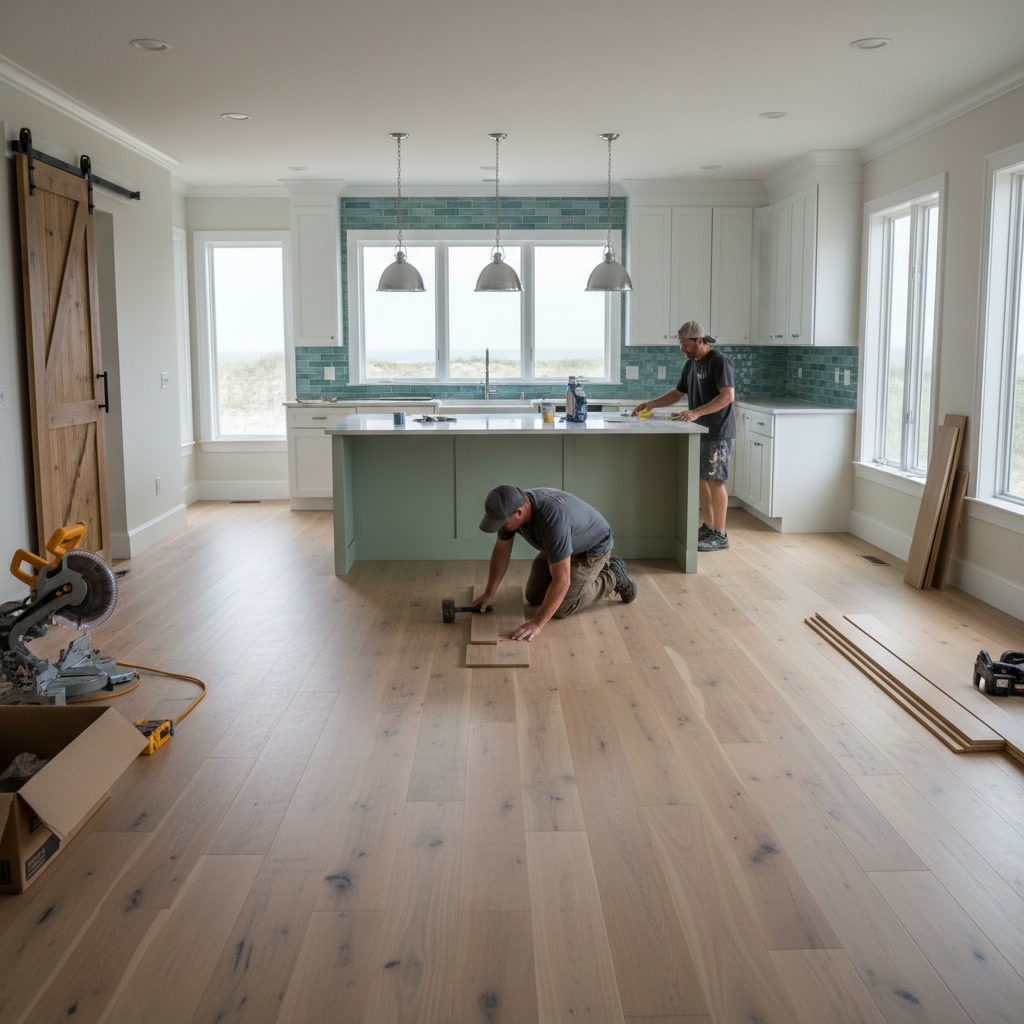
Salt air, humidity, and moisture don’t just affect your outdoor furniture. They also impact every surface inside your coastal home, especially your floors. Homes near the ocean face conditions that can warp hardwood, trap moisture under carpeting, and accelerate wear on materials that perform perfectly fine inland. Choosing the best flooring coastal homes need means understanding how these environmental factors affect different materials and which options deliver both durability and style.
This guide breaks down the most reliable flooring choices for properties along the South Jersey coast, from Avalon to Cape May to Ocean City. You’ll learn which materials resist moisture damage, how to prevent salt air corrosion, and what installation details matter most when you’re this close to the Atlantic.
Why Coastal Homes Need Special Flooring Considerations
The difference between inland and coastal flooring isn’t just marketing talk. Homes within a few miles of the ocean deal with airborne salt particles that settle on every surface. These particles attract moisture from humid air, creating conditions that promote mold growth, wood swelling, and adhesive breakdown.
Humidity levels in coastal areas typically run 10 to 20 percentage points higher than inland locations. Even with air conditioning, your floors experience constant expansion and contraction cycles. Traditional hardwood floors that work beautifully in Hammonton or Vineland may cup, warp, or gap when installed in Margate or Sea Isle City.
Sand is another factor. Even with doormats and regular cleaning, fine sand particles work their way into floor seams and underneath surfaces. Over time, this acts like sandpaper, wearing down finishes and creating gaps where moisture can penetrate.
Pro Tip: If you live within three miles of the coastline, treat your home as a high-humidity environment year-round, regardless of your HVAC system. Choose flooring materials rated for moisture exposure.
Luxury Vinyl Plank and Tile
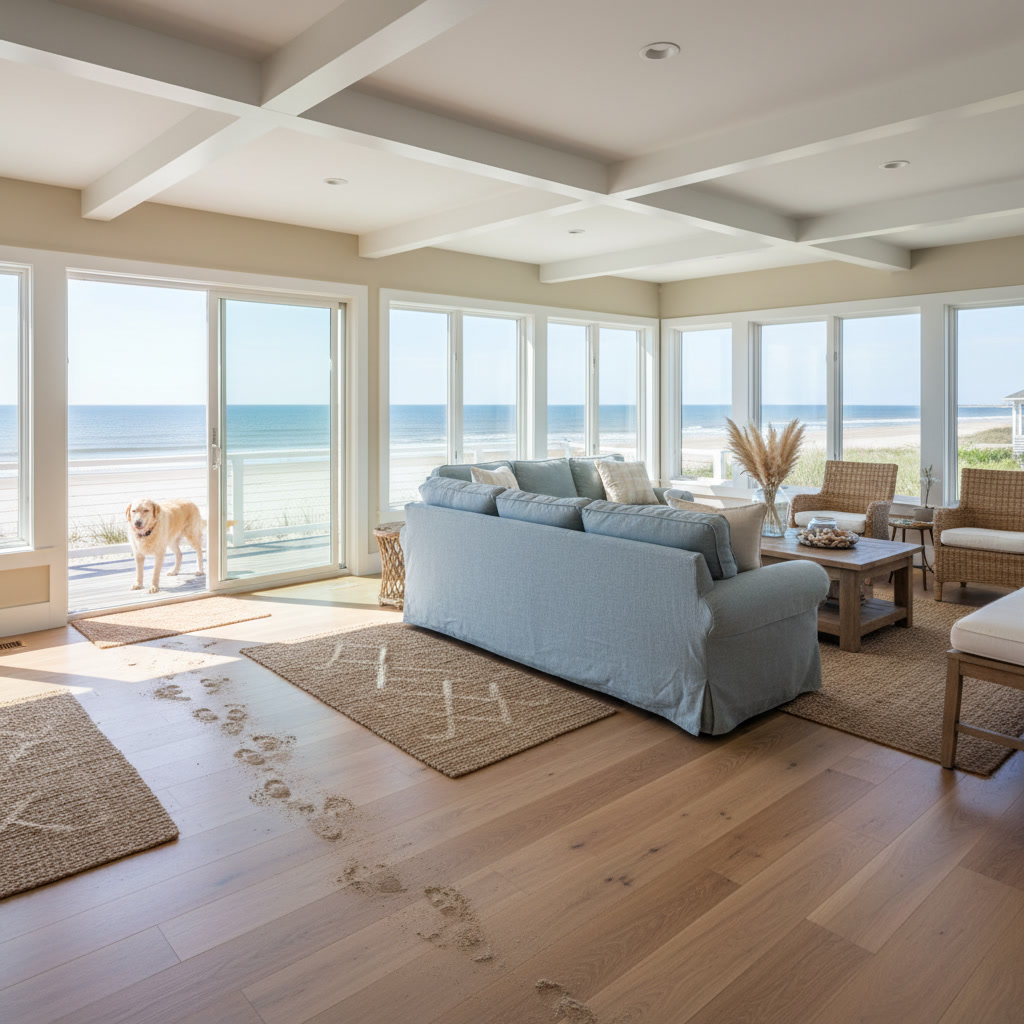
Luxury vinyl plank (LVP) and luxury vinyl tile (LVT) have become the best flooring coastal homes can install for good reason. These materials are 100% waterproof, not just water-resistant. They handle standing water, humidity spikes, and direct moisture contact without warping, swelling, or deteriorating.
Modern LVP products replicate hardwood grain patterns with remarkable accuracy. You get the look of oak, maple, or exotic wood without the moisture sensitivity. The wear layer on quality LVP ranges from 12 mil to 30 mil thick, providing scratch resistance that holds up to sand traffic.
Installation Considerations for Vinyl
Click-lock floating floors work well in coastal homes because they allow the material to expand and contract without buckling. The floor isn’t glued down, so moisture changes in the subfloor won’t affect the surface layer. Leave a quarter-inch expansion gap around all perimeter walls and vertical surfaces.
For bathrooms and laundry rooms, fully adhered LVT with waterproof adhesive creates a seamless barrier. This prevents water from reaching the subfloor if a leak occurs. The adhesive must be rated for high-moisture environments, or it will release in humid conditions.
Thickness and Quality Factors
Look for LVP that’s at least 5mm thick with an attached underlayment. Thicker planks feel more solid underfoot and resist telegraphing of minor subfloor imperfections. The wear layer should be 12 mil minimum for residential use, 20 mil if you have pets or high foot traffic.
Price ranges from $2 to $7 per square foot for materials. Installation adds $1.50 to $3 per square foot depending on room layout and subfloor preparation needs. A 500-square-foot project typically runs $1,750 to $5,000 installed.
Porcelain and Ceramic Tile
Tile remains one of the most durable options for coastal environments. Porcelain tile is denser than ceramic and absorbs less than 0.5% of its weight in water, making it virtually impervious to moisture damage. It won’t warp, swell, or deteriorate from humidity exposure.
The challenge with tile isn’t the material itself but the grout lines between tiles. Standard cement-based grout is porous and can harbor mold in humid conditions. Use epoxy grout or urethane grout in coastal homes. These products cost more but resist moisture penetration and stay cleaner longer.
Large Format Tiles Reduce Maintenance
Tiles measuring 12×24 inches or larger mean fewer grout lines to clean and seal. This reduces the surface area where moisture can penetrate. Rectified edges allow for tighter grout joints, typically 1/16 to 1/8 inch, which further minimizes maintenance.
Wood-look porcelain planks are increasingly popular in coastal homes. These tiles replicate hardwood grain and color while delivering the waterproof performance of ceramic. They’re ideal for kitchens, bathrooms, and entryways where you want the wood aesthetic without moisture risk.
Installation Requirements
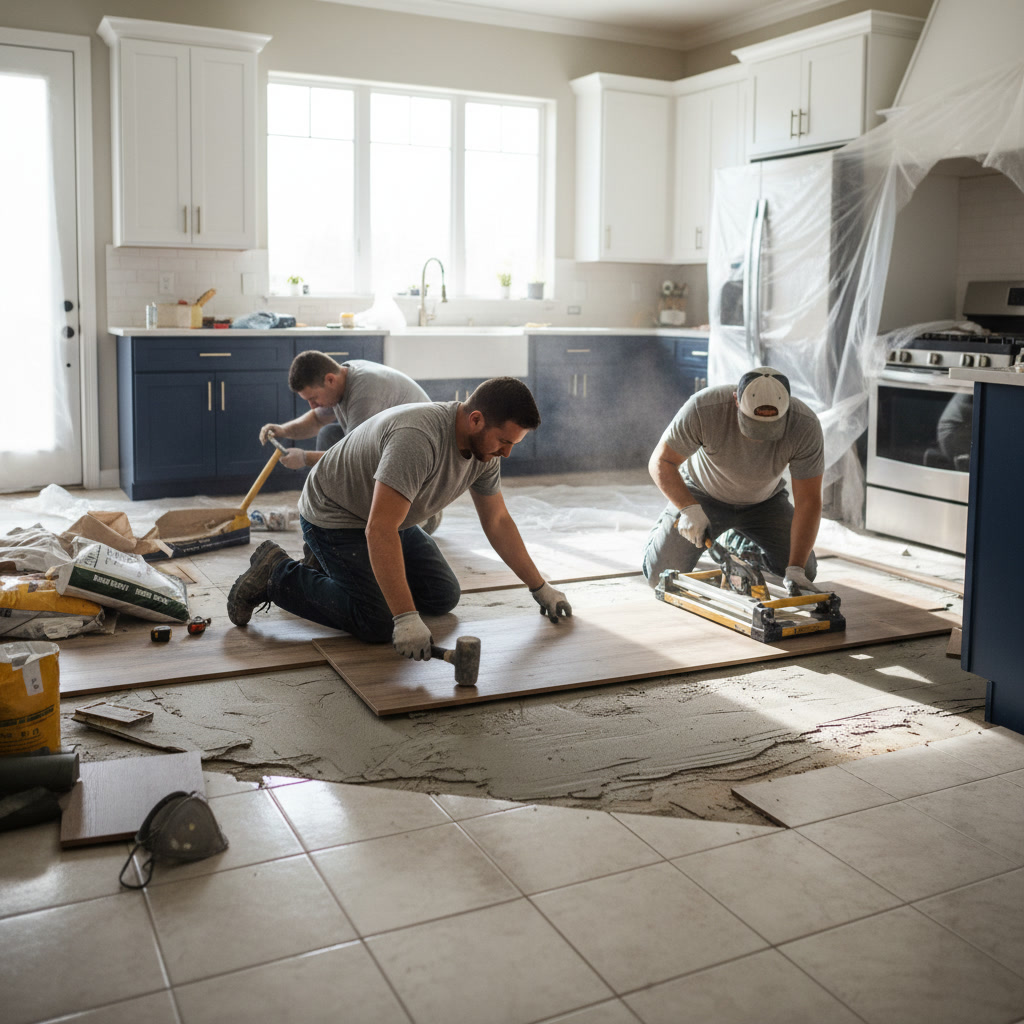
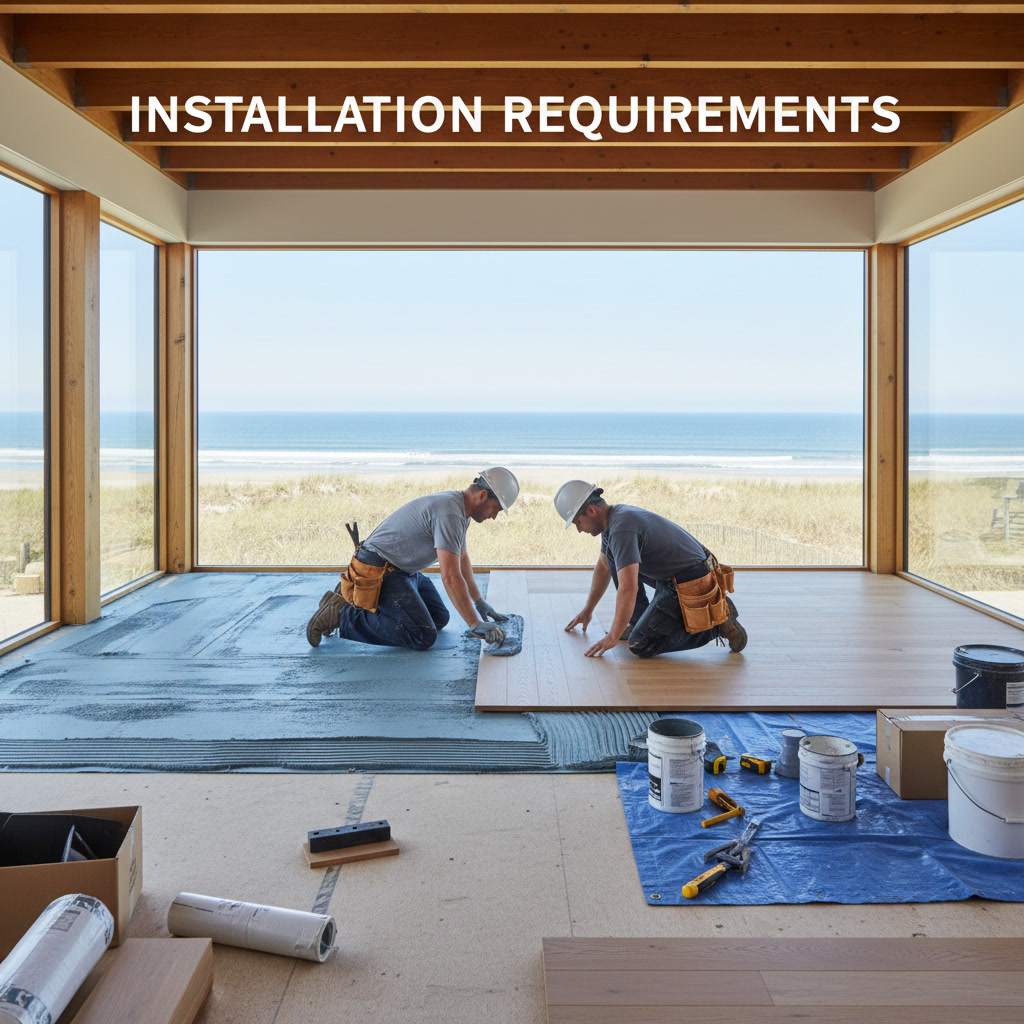
Tile needs a solid, level substrate. In coastal homes, use cement backer board over the subfloor rather than plywood alone. This creates a moisture-resistant base that won’t deteriorate if humidity penetrates the tile layer. Apply waterproof membrane in bathrooms and other wet areas before setting tile.
Material costs range from $3 to $15 per square foot depending on tile quality and size. Professional installation runs $5 to $12 per square foot. Expect to invest $4,000 to $13,500 for a 500-square-foot space including materials and labor.
Engineered Hardwood
Solid hardwood and coastal homes don’t mix well. The wood expands and contracts too much in high humidity, leading to gaps, cupping, and finish damage. Engineered hardwood offers a middle ground. It consists of a thin hardwood veneer bonded to layers of plywood or high-density fiberboard. This construction is more stable than solid wood but still requires careful selection.
Not all engineered hardwood works in coastal environments. Look for products with marine-grade or waterproof cores. Standard engineered wood uses wood-based cores that can still swell if exposed to moisture. Marine-grade versions use stone-plastic composite or waterproof HDF cores that won’t deteriorate.
Finish and Seal Protection
The factory finish on engineered hardwood matters more in coastal areas than inland. Choose products with aluminum oxide or ceramic-infused finishes. These create harder surface protection that resists moisture penetration better than standard polyurethane.
Even with the best finishes, engineered hardwood should be kept away from areas with direct water exposure. Use it in bedrooms, living rooms, and dining areas, but not in bathrooms, laundry rooms, or mudroom entryways where water contact is likely.
Acclimation and Installation
Let engineered hardwood acclimate in your home for at least 72 hours before installation, longer in summer months when humidity peaks. This allows the wood to adjust to your indoor environment and reduces post-installation movement.
Floating installations work better than glue-down or nail-down in coastal homes. The floor can expand and contract freely without stress on the boards or fasteners. Maintain indoor humidity between 35% and 55% year-round using dehumidifiers during summer months.
Quality engineered hardwood costs $4 to $12 per square foot. Installation adds $3 to $8 per square foot. A typical 500-square-foot project ranges from $3,500 to $10,000 complete.
Polished Concrete and Epoxy Coatings
Concrete floors are gaining popularity in modern coastal homes. Polished concrete is completely waterproof, doesn’t support mold growth, and handles sand and salt exposure without damage. The thermal mass helps moderate indoor temperatures, which can reduce cooling costs in summer.
The existing concrete slab is ground smooth using progressively finer diamond abrasives, then sealed with a penetrating sealer or topical coating. The result is a smooth, durable surface that reflects light and creates a contemporary aesthetic.
Epoxy and Polyaspartic Coatings
Decorative epoxy coatings offer another concrete-based option. These systems apply colored epoxy or polyaspartic resins over prepared concrete, creating seamless, waterproof floors in virtually any color or pattern. Metallic epoxies create wave-like patterns that complement coastal design themes.
Polyaspartic coatings cure faster than epoxy and have better UV resistance, which matters if you have large windows that let in direct sunlight. They also remain flexible, reducing the risk of cracking as the concrete substrate moves with temperature and humidity changes.
Comfort and Design Flexibility
Concrete feels hard underfoot compared to vinyl or wood. Add area rugs in living spaces and bedrooms for comfort. Radiant floor heating can be installed in the concrete slab before coating, creating a warm surface during cooler months.
Color and finish options range from industrial gray to custom tints that match your design scheme. Aggregate can be exposed for texture, or the surface can be polished to a high gloss. The flexibility makes concrete suitable for contemporary, industrial, and even traditional coastal aesthetics.
Polished concrete runs $3 to $8 per square foot depending on existing slab condition. Epoxy coatings cost $4 to $12 per square foot installed. These prices assume the concrete slab is in good condition and doesn’t require extensive repair.
What to Avoid in Coastal Homes
Some flooring materials simply don’t perform well near the ocean, regardless of how carefully they’re installed or maintained. Solid hardwood tops this list. Even exotic species marketed as moisture-resistant will move excessively in coastal humidity.
Wall-to-wall carpeting creates mold and odor problems in coastal homes. The carpet pad traps moisture and provides an ideal environment for mold spores. If you want carpet in bedrooms, use area rugs over hard flooring instead. They can be removed, cleaned, and dried if needed.
Laminate Flooring Limitations
Traditional laminate flooring uses a fiberboard core that swells rapidly when exposed to moisture. Water-resistant and waterproof laminate products have improved, but they still don’t match the moisture performance of LVP. If you’re choosing between laminate and luxury vinyl, vinyl delivers better long-term results in coastal environments.
Bamboo flooring faces similar challenges to solid hardwood. Despite being marketed as eco-friendly and durable, bamboo expands and contracts significantly with humidity changes. Strand-woven bamboo is denser and more stable than traditional bamboo but still doesn’t match engineered options designed for moisture exposure.
Cork and Natural Fibers
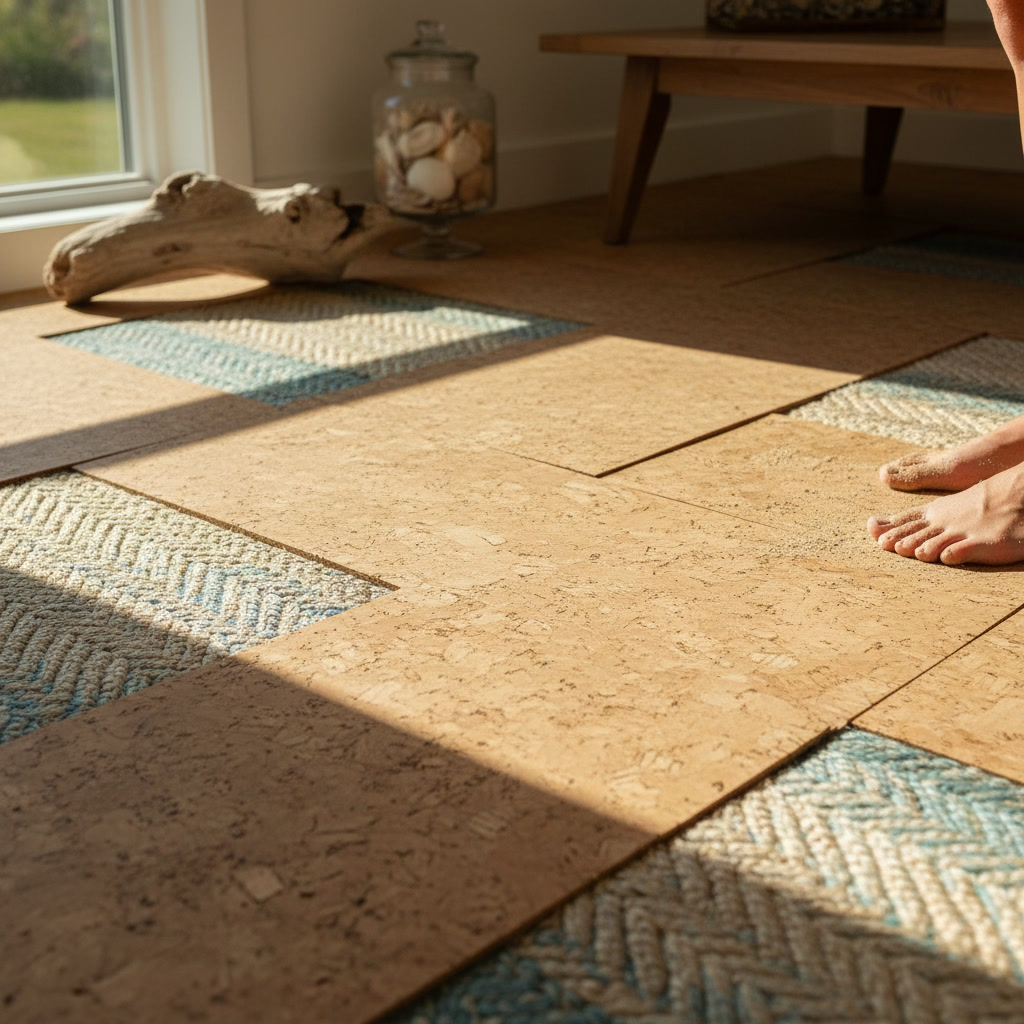
Cork flooring is naturally antimicrobial and comfortable underfoot, but it requires careful sealing to resist moisture. In coastal homes, the maintenance requirements outweigh the benefits. Natural fiber materials like sisal, jute, and seagrass absorb moisture readily and can develop mildew odors in humid conditions.
Maintenance Tips for Coastal Flooring
Even the best flooring coastal homes can install requires appropriate maintenance to perform well long-term. Regular cleaning prevents salt and sand buildup that accelerates wear. Sweep or vacuum daily in high-traffic areas and weekly throughout the rest of the home.
Use doormats at every exterior entrance and encourage family members to remove shoes inside. This simple step dramatically reduces the amount of sand and salt tracked onto your floors. Wash doormats weekly to prevent them from becoming a source of grit.
Humidity Control Strategies
Maintain indoor humidity between 30% and 50% year-round. Use dehumidifiers during summer months and run your HVAC system consistently rather than turning it off when you’re away. Large humidity swings cause more floor movement than stable high humidity.
Clean up water spills immediately, even on waterproof flooring. Standing water can migrate to seams, edges, and transitions where moisture can reach subflooring. This is especially important around kitchen sinks, dishwashers, and bathroom fixtures.
Seasonal Inspections
Check floor transitions, baseboards, and areas around plumbing fixtures twice a year. Look for signs of moisture penetration like discoloration, soft spots, or musty odors. Catching problems early prevents minor issues from becoming major repairs.
Reseal grout lines in tile floors annually if you used standard cement grout. Epoxy grout doesn’t require resealing but should still be inspected for cracks or damage. Touch up any damaged areas promptly to maintain moisture protection.
Professional Installation Matters
Flooring installation in coastal homes requires understanding how moisture, salt air, and humidity affect different materials. Proper substrate preparation, correct adhesive selection, and appropriate expansion gaps make the difference between flooring that lasts 20 years and flooring that fails in five.
Subfloor moisture testing should be performed before installing any flooring. Concrete slabs can transmit ground moisture even in new construction. If moisture levels exceed manufacturer specifications, a vapor barrier or moisture mitigation system must be installed first.
Transition strips between different flooring types and between rooms need to accommodate movement. Rigid transitions can crack or pull loose as materials expand and contract. Use flexible transitions or leave appropriate expansion gaps that are covered by trim rather than filled.
Key Takeaway: Cutting corners on installation to save money upfront often leads to complete floor replacement within a few years. The cost difference between basic and proper coastal installation is minor compared to replacement costs.
Frequently Asked Questions
Can you install hardwood floors in a beach house?
Solid hardwood is not recommended for homes within three miles of the coast due to humidity-related expansion and contraction. Engineered hardwood with a waterproof core can work in living areas and bedrooms if you maintain consistent indoor humidity levels. Avoid hardwood in bathrooms, kitchens, and entryways where direct water exposure is likely.
How long does luxury vinyl plank last in coastal homes?
Quality luxury vinyl plank with a 20 mil or thicker wear layer typically lasts 15 to 25 years in coastal environments with proper maintenance. The waterproof construction isn’t affected by humidity or salt air. Lifespan depends more on foot traffic levels and how well the floor is maintained than on coastal conditions.
Do I need special underlayment for coastal flooring?
For floating floors like LVP or engineered hardwood, use underlayment with a built-in vapor barrier rated at 6 mil thickness or greater. This prevents ground moisture from migrating through the subfloor and affecting your flooring. Concrete slabs should be tested for moisture and treated with vapor barrier systems if levels exceed 3 pounds per 1,000 square feet per 24 hours.
What is the most affordable waterproof flooring for coastal homes?
Luxury vinyl plank offers the best combination of affordability and waterproof performance for coastal properties. Quality products start around $2 per square foot for materials. Sheet vinyl is slightly less expensive but has fewer design options. Polished concrete can be cost-effective if you have an existing slab in good condition.
How do you prevent mold under flooring in humid climates?
Control indoor humidity with dehumidifiers and consistent HVAC operation. Install vapor barriers over concrete subfloors before laying flooring. Use mold-resistant underlayment products. Ensure proper ventilation in crawl spaces and basements. Clean up water spills immediately and address plumbing leaks promptly. Regular inspection of areas around fixtures and appliances helps catch moisture problems before mold develops.
Making the Right Choice for Your Home
Selecting the best flooring coastal homes need comes down to balancing moisture resistance, durability, aesthetics, and budget. Luxury vinyl plank and porcelain tile deliver the most reliable long-term performance in high-humidity environments. Engineered hardwood with waterproof cores works well in living spaces if you’re willing to maintain humidity control and accept some limitations on placement.
The installation quality matters as much as the material choice. Proper substrate preparation, moisture testing, and attention to expansion gaps ensure your floors perform as intended for decades.
Quality Affordable Construction LLC has been installing durable flooring in coastal South Jersey homes throughout Atlantic City, Ocean City, Cape May, and surrounding communities since 2017. Our team understands the unique challenges salt air and humidity create for flooring systems. We provide straightforward assessments of your space, honest material recommendations, and installation practices that account for coastal conditions. If you’re planning a flooring project in Egg Harbor Township or anywhere along the South Jersey coast, call +16095923410 to discuss which options will work best for your property.